
CCA@CCA Symposium: Hope As Movement
 +
Add to calendar
+
Add to calendar
Thu, Apr 2 2026, 4:30PM - 6PM
Blattner Hall | 75 Arkansas Street, San Francisco, CA, 94107 View map
Part of event series: Creative Citizens Series Spring 2026
Organized by
CCA Exhibitions and CCA@CCA
Event description
The 2026 CCA@CCA Symposium, under the theme Hope As Movement, dives deeper into the question: how do we cultivate hope to fight the paralysis created by fear?
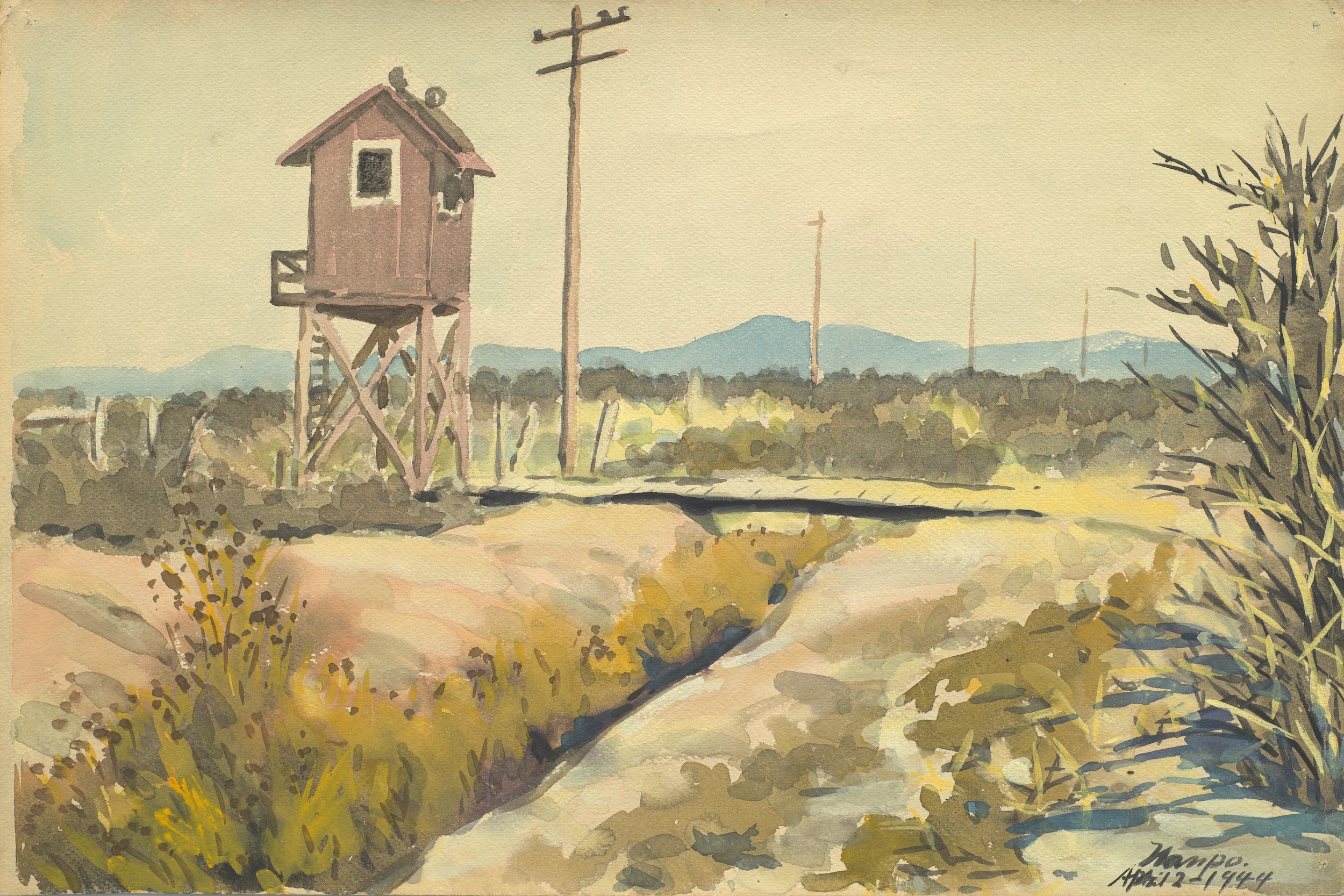
This symposium addresses the role of art as a witness during times of oppression by focusing on the paintings of Japanese artist Chikaji Kawakami, who created art to document his life and elevate his spirits while incarcerated at internment camps at Tanforan and Topaz during WWII. Artworks by both Kawakami and the influential Japanese-American artist Chiura Obata are featured in the accompanying exhibition, Under the Guard Tower: The Watercolors of Chikaji Kawakami, at California College of the Arts’ Campus Gallery from April 1–May 15, 2026.
The symposium panelists include Chikaji Kawakami’s granddaughter, Diane Kawakami Coward; the director of the Monterey Museum of Art, Corey Madden; the exhibition curator, Lydia Nakashima Degarrod; and Masako Takahashi and TT Takemoto, contemporary artists whose art practices address internment. The panelists will address issues related to the role of art under oppression and the legacy of artists such as Kawakami and Obata. Nobuko Fukatsu will perform traditional and contemporary pieces on the biwa.
The symposium will be followed by an exhibition reception from 6 to 8 pm at the adjacent CCA Campus Gallery (1480 17th Street).
Symposium support is provided by The Henri and Tomoye Takahashi Charitable Foundation and the Deborah and Kenneth Novack Creative Citizens Endowment.
Symposium Speakers
Diane Kawakami Coward is the granddaughter of Chikaji Kawakami, a watercolor artist who was incarcerated at Topaz, Utah, during WWII. Chikaji was invited by former UC Berkeley faculty member Chiura Obata to serve as a teacher at the art school he established at Topaz camp. After the war, her family resettled in Chicago and later San Francisco. Experiencing housing instability in her own family history shaped Diane’s commitment to equitable development. She earned a degree in Architecture from UC Berkeley and is the CEO of Revision West, a real estate development company focused on building housing for the “missing middle.”
Corey Madden’s wide-ranging career spans leadership, teaching, and creative positions across the visual and performing arts, including roles at the Getty Museum and Villa, California Institute of the Arts, and the Music Center of Los Angeles. Since 2020, she has served as Executive Director of the Monterey Museum of Art, where she has revitalized the organization and led a comprehensive building and capital campaign. Under her leadership, the museum launched the annual Block Party arts festival and inaugurated the Monterey Biennial in 2025. MMA has collaborated on exhibitions with the Oakland Museum of Art, the Japanese American National Museum, Sonoma Valley Museum of Art, California College of the Arts, and Loyola Marymount College.
Lydia Nakashima Degarrod, Ph.D. is a visual artist, cultural anthropologist, and curator whose work has been exhibited in museums and galleries across the United States and internationally. She has received awards from the International Contemporary Craft Competition & Exhibition, the Wing Luke Memorial Museum, Saint John’s University, the California Story Fund, and the California Council for the Humanities, among others. As a scholar, she has been supported by Fulbright, the Tinker Foundation, the National Endowment for the Humanities, and the California Council for the Humanities. Degarrod has held postdoctoral fellowships at the University of Virginia and Harvard University and completed residencies at the de Young Museum, Djerassi Artists Program, Kala Art Institute, and Blue Mountain Center. She currently serves as Senior Adjunct Faculty in Critical Studies at California College of the Arts.
Masako Takahashi was born in Topaz, Utah, where her family was incarcerated during World War II. She later received a painting scholarship to the San Francisco Art Institute. Coming of age during the Civil Rights and Ethnic Studies movements, Takahashi developed a practice shaped by questions of identity, racism, and displacement. After moving to Mexico, she began embroidering her own hair into intricate abstract compositions, creating a deeply personal visual language. Her work resists literal translation while expressing vulnerability and resilience. Takahashi’s art has been exhibited in museums and galleries in the Netherlands, the United States, Mexico, Spain, and Japan.
TT Takemoto is a queer Japanese American artist and scholar exploring Asian American history, sexuality, and identity. Their work delves into hidden dimensions of same-sex intimacy and trauma existing within Asian and Asian American archives. Takemoto was awarded the Grand Jury Prize for Best Experimental Film at Slamdance Film Festival and the Best Experimental Film Jury Award at Austin LGBTQ+ International Film Festival (aGLIFF). Their screenings include Ann Arbor, Anthology Film Archive, Asian Art Museum, BFI Flare, de Young Museum, Documenta 15, MIX Mexico, Marseille Underground Film Festival, Outfest, Queer Forever! (Hanoi), Rio Gay Film Festival, SFMOMA, and Xposed International Queer Film Festival (Berlin).
Nobuko Fukatsu is a biwa (Japanese lute) performer based in Los Angeles. Born in Japan, she began studying Satsuma-biwa in 2005 under renowned musician Yoshiko Sakata. After relocating to the United States, she has performed at cultural gatherings, festivals, and educational settings and has contributed to recordings for film and other media. Her repertoire spans classical narrative works such as The Tale of the Heike, contemporary narrative compositions, and modern instrumental pieces. She also creates original settings of short literary texts in Japanese and English. Fukatsu performs on instruments that survived the World War II incarceration of Japanese Americans and researches the history of biwa within Japanese immigrant communities in Los Angeles.
Entry details
Free and open to the public