
Under the Guard Tower Module 7 / Oral Histories
Duration: 30 minutes
Learning Objective: Engage with oral histories and visual artworks to deepen understanding of daily life in the Topaz incarceration camp, and to understand how lived experience, memory, and resilience are communicated through multiple forms of storytelling.
→ Download all seven Under the Guard Tower Teaching Modules as a PDF
Densho, meaning "to pass on to future generations," is a non-profit organization dedicated to "sharing the history of the WWII incarceration of Japanese Americans to promote equity and justice today." Densho has collected first-hand materials and oral accounts to preserve the voices and memories of people who were interned.
→ Visit the Densho website and select three oral accounts from people who experienced internment at Topaz. Listen carefully, taking notes.
→ Reflect on the following questions:
What new information or perspectives did you gain from these accounts?
What details felt most vivid or surprising, and why?
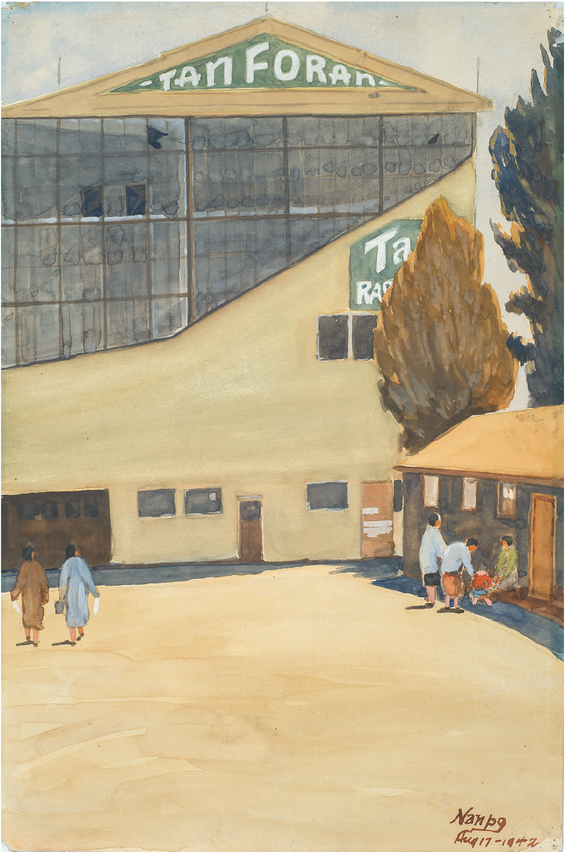
→ Revisit one or more of Chikaji Kawakami’s paintings in the exhibition. In small groups, answer the following questions:
In what ways do Kawakami’s paintings visually echo, expand upon, or contrast with the experiences described in the oral histories?
How do oral testimony and visual art work together to preserve memory and convey lived experience?
How do different forms of storytelling shape empathy, understanding, and historical memory?
Image credit: Chikaji Kawakami, The Grandstands, 1942
Related Pages
- Under the Guard Tower: The Watercolors of Chikaji Kawakami
- Under the Guard Tower Module 1 / Depicting Life at the Camps
- Under the Guard Tower Module 2 / Self-Representation
- Under the Guard Tower Module 3 / The Killing of James Wakasa
- Under the Guard Tower Module 4 / Nature and Memory
- Under the Guard Tower Module 5 / Gardening and Nourishment
- Under the Guard Tower Module 6 / The Role of Art Schools